Rae State Secondary School
Address
Aruküla 22, Jüri alevik, Rae vald, Harjumaa, Estonia
Architecture
KOKO arhitektid OÜ
Structural Engineering
First stages - PCC Projekt AS
Engineered Timber - Makespace OÜ
Reinforced Concrete Structures - Merko Ehitus Eesti AS
Interior Architecture
KOKO arhitektid OÜ
Construction
Merko Ehitus Eesti AS
Built
2024
Photographs
Tõnu Tunnel
Project Insights: A Structural Engineer's View
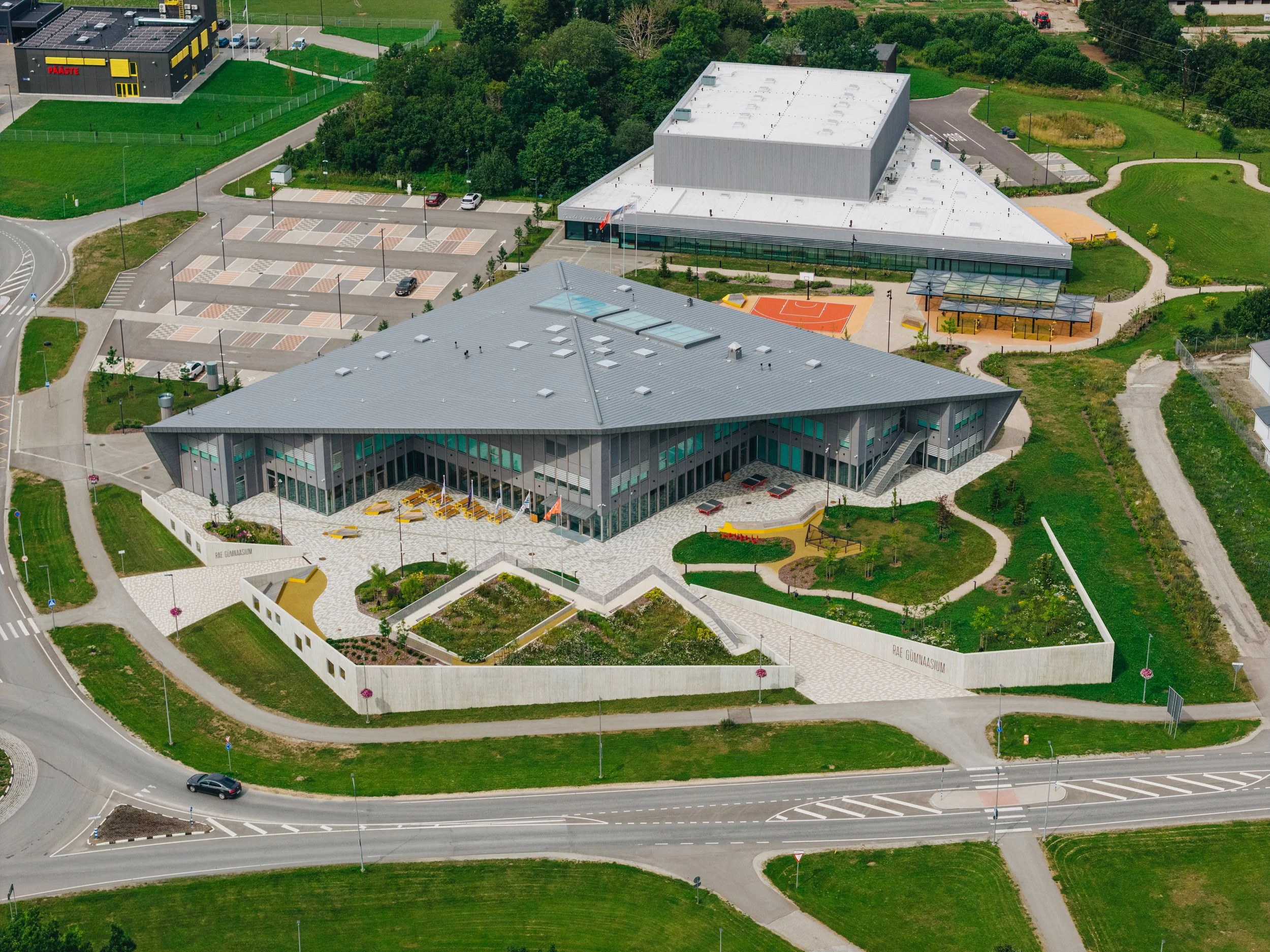
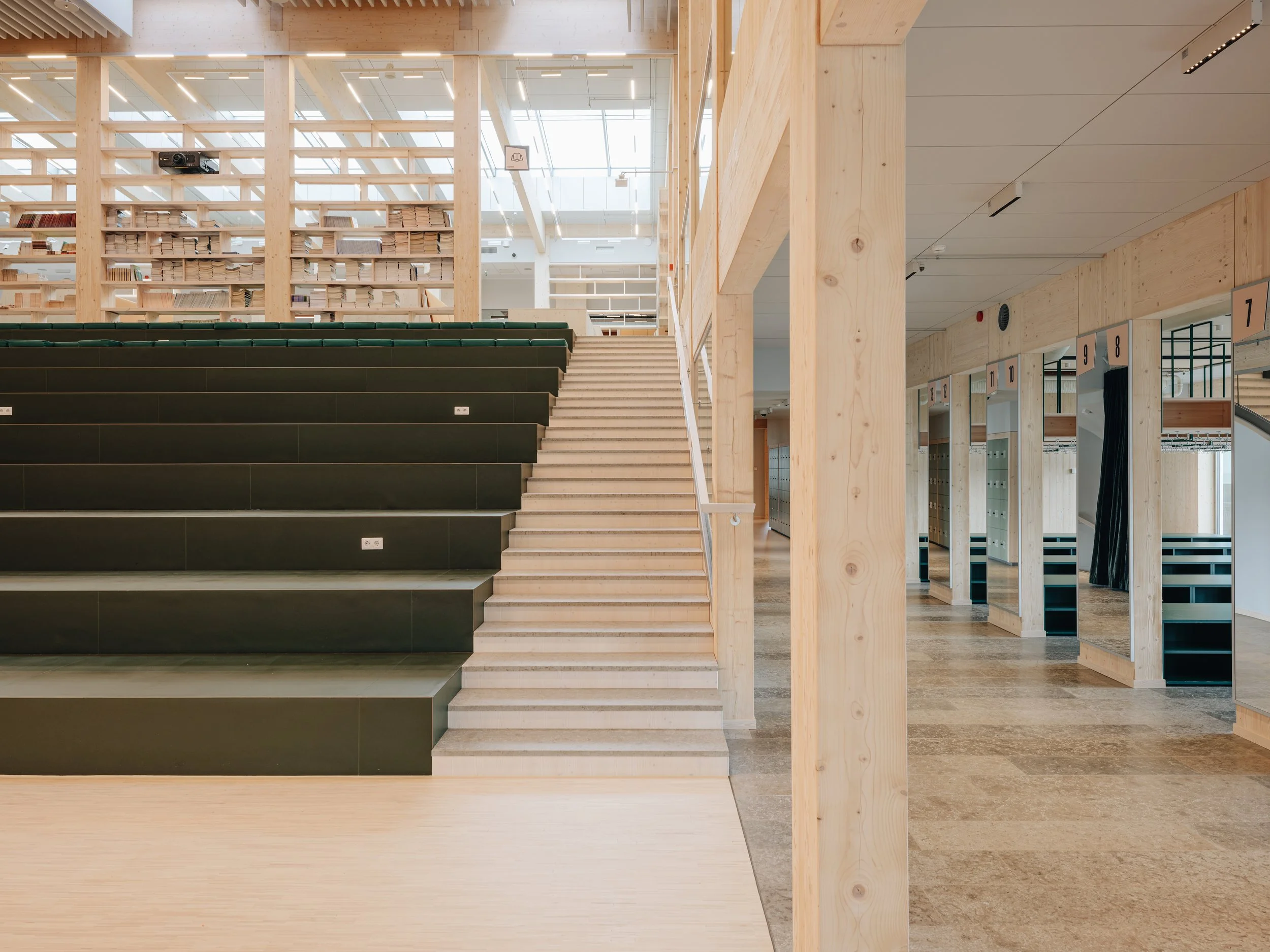
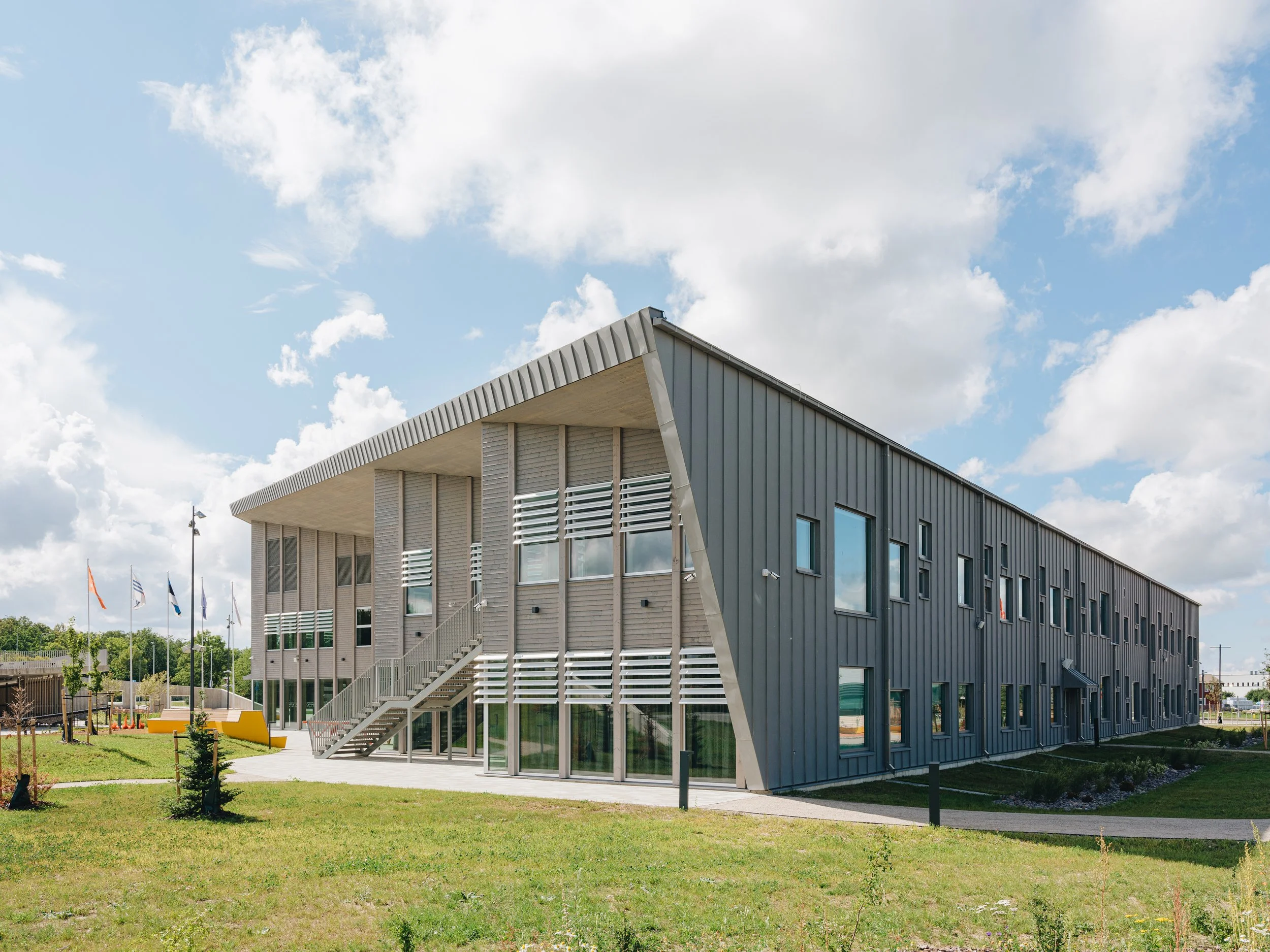
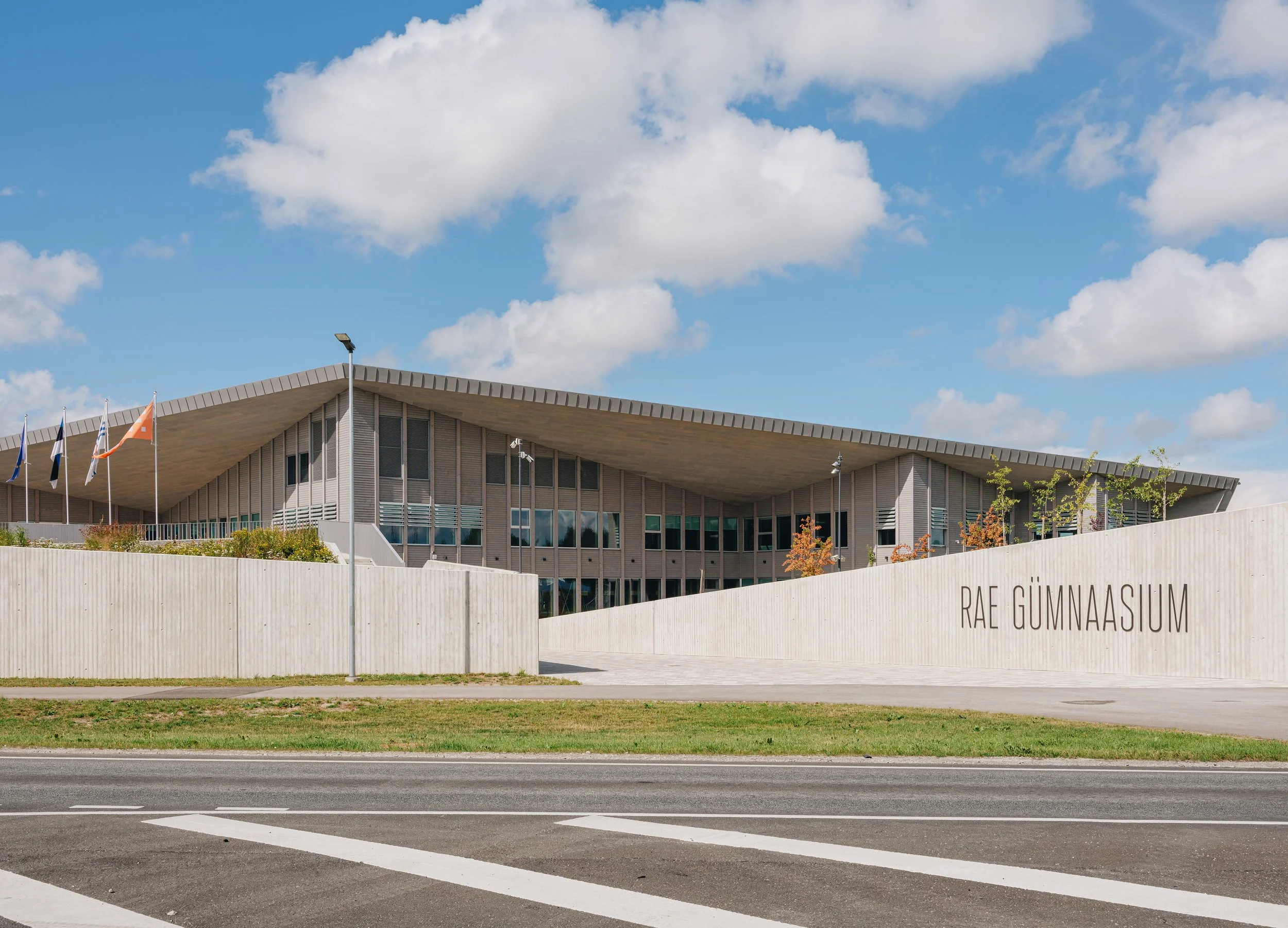
Rae State Upper Secondary School serves as a benchmark for contemporary timber architecture where structural efficiency meets extreme geometric complexity. The building’s skeleton is a refined hybrid of cross-laminated timber and glulam, designed with a meticulous focus on material economy and technical precision. While the total volume is impressive — comprising 1 435 m3 of CLT and 257 m3 of glulam in net figures — the true engineering feat lies in the individual components: out of 1 211 total structural parts, 845 are uniquely shaped, bespoke-engineered pieces. This tailored approach allowed for the realization of the building’s dynamic forms and intricate eaves without unnecessary increases in total timber volume.
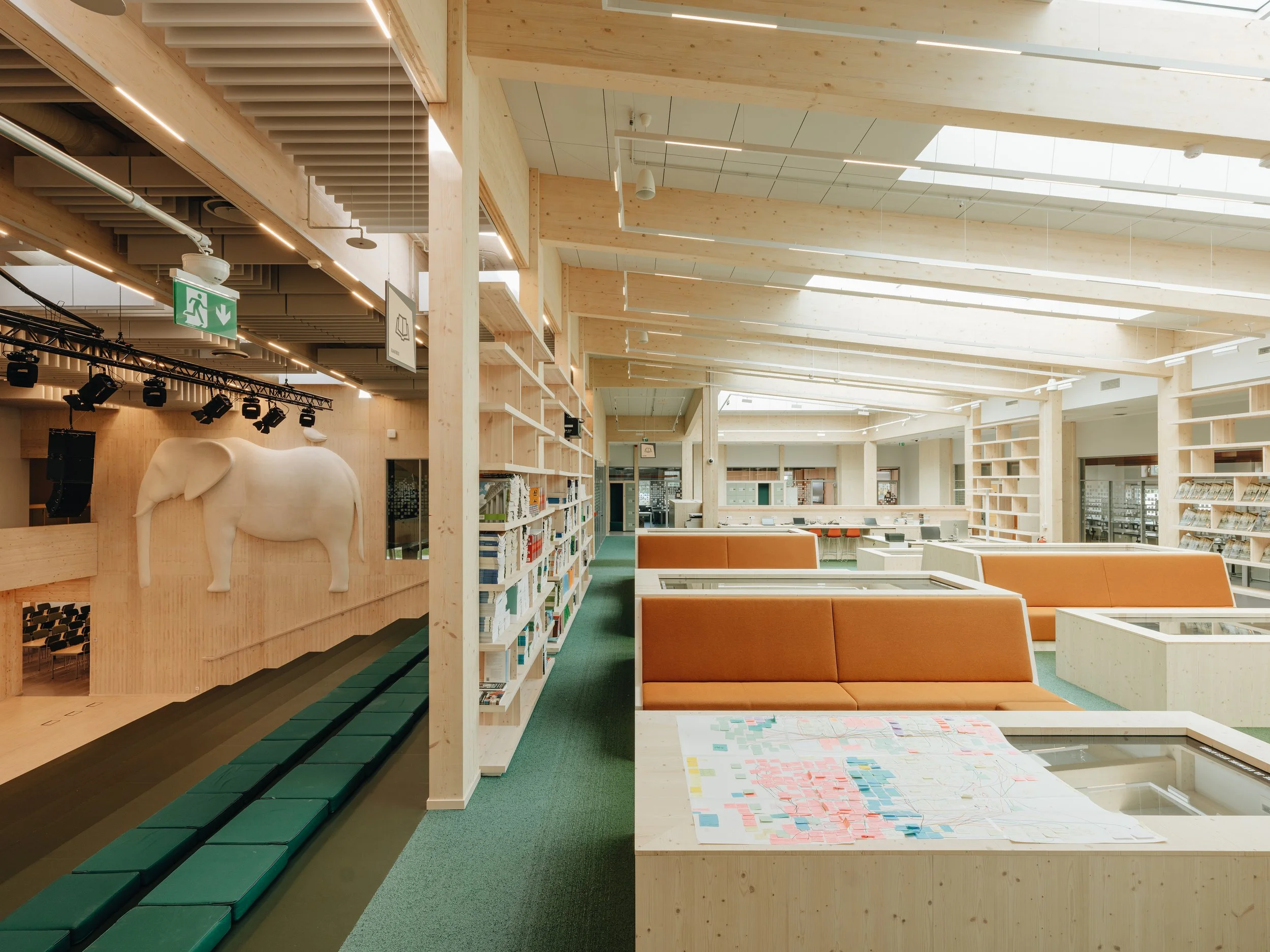
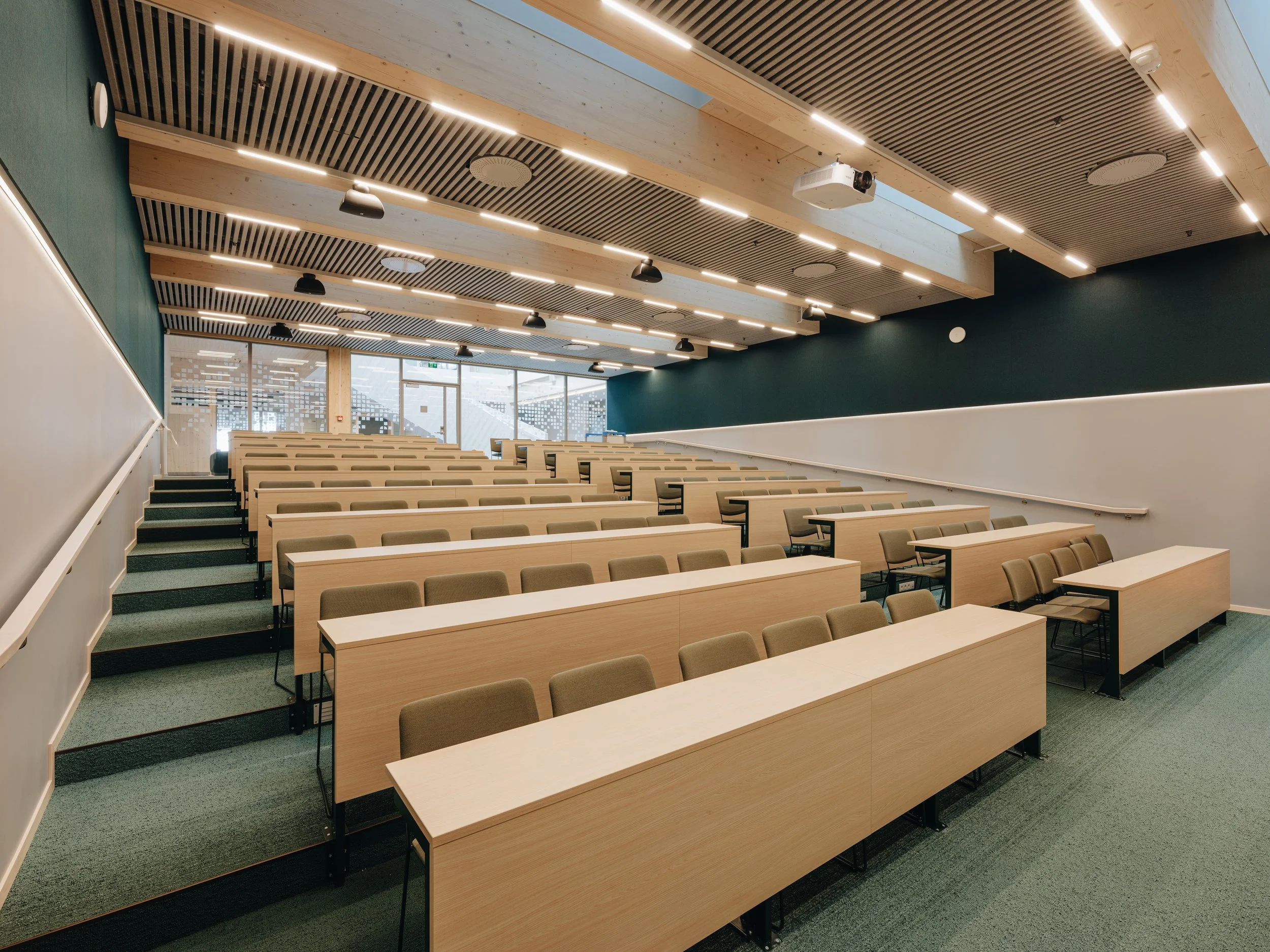
The focal point of the building’s technical prowess is the main auditorium hall. To create an expansive, column-free space, the structure utilises 15.2-metre-long precambered glulam beams. These beams are specifically engineered to simultaneously support the heavy loads of both the intermediate floor and the complex roof structure above. This dual-purpose solution ensures structural integrity while maintaining the airy, open feel essential for a modern learning environment.
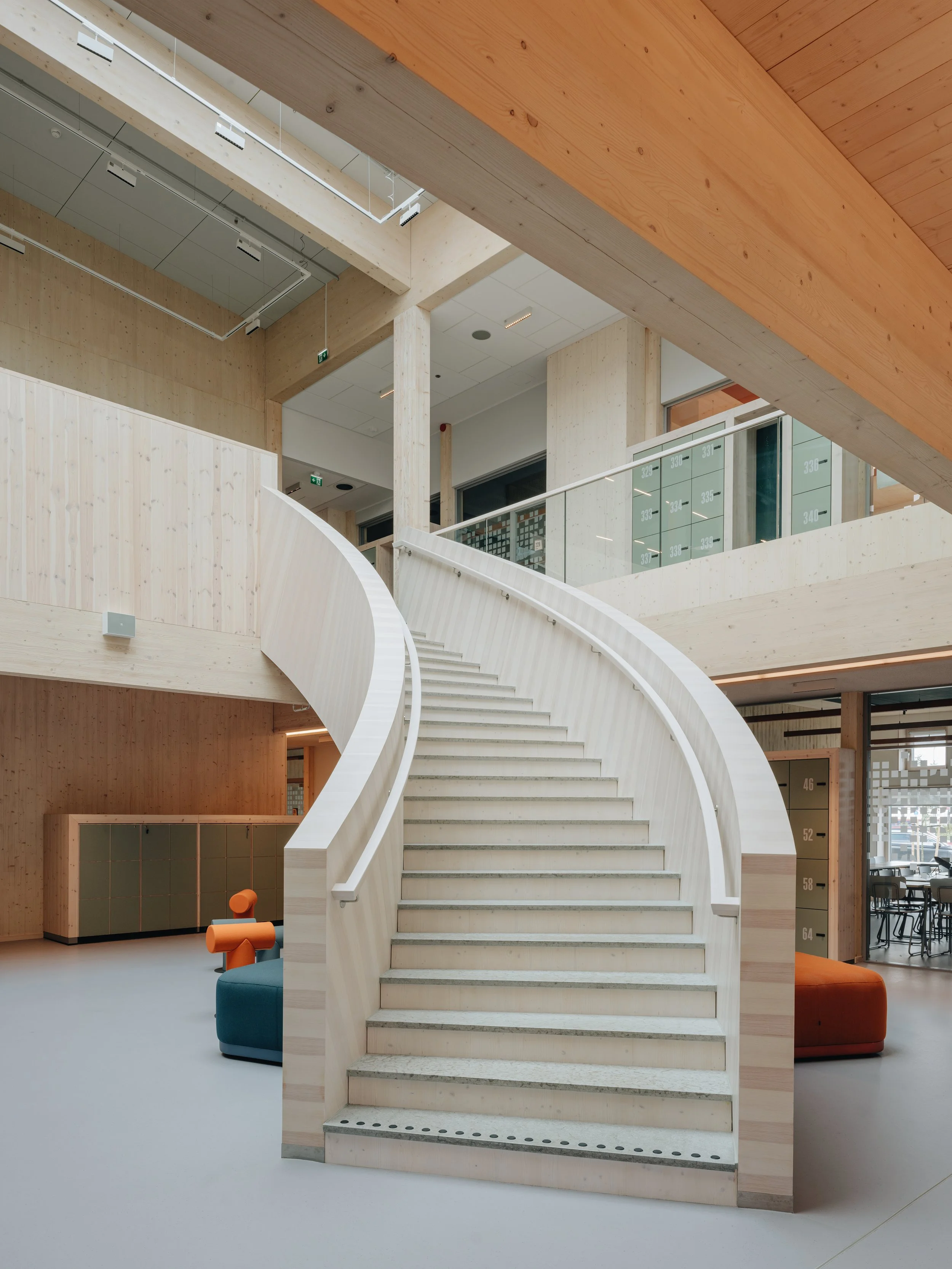
To preserve the architectural purity of the exposed timber, the engineering team developed 236 unique structural nodes. These solutions rely predominantly on hidden connectors, ensuring that the natural beauty of the wood remains unobstructed by visible steel. The entire project was managed through a phased BIM-integrated workflow, ensuring that these complex, custom structures were realised with absolute precision over a seven-month period. While timber defines the building's character, steel is strategically integrated for functional support in critical areas, such as the central spiral staircase.