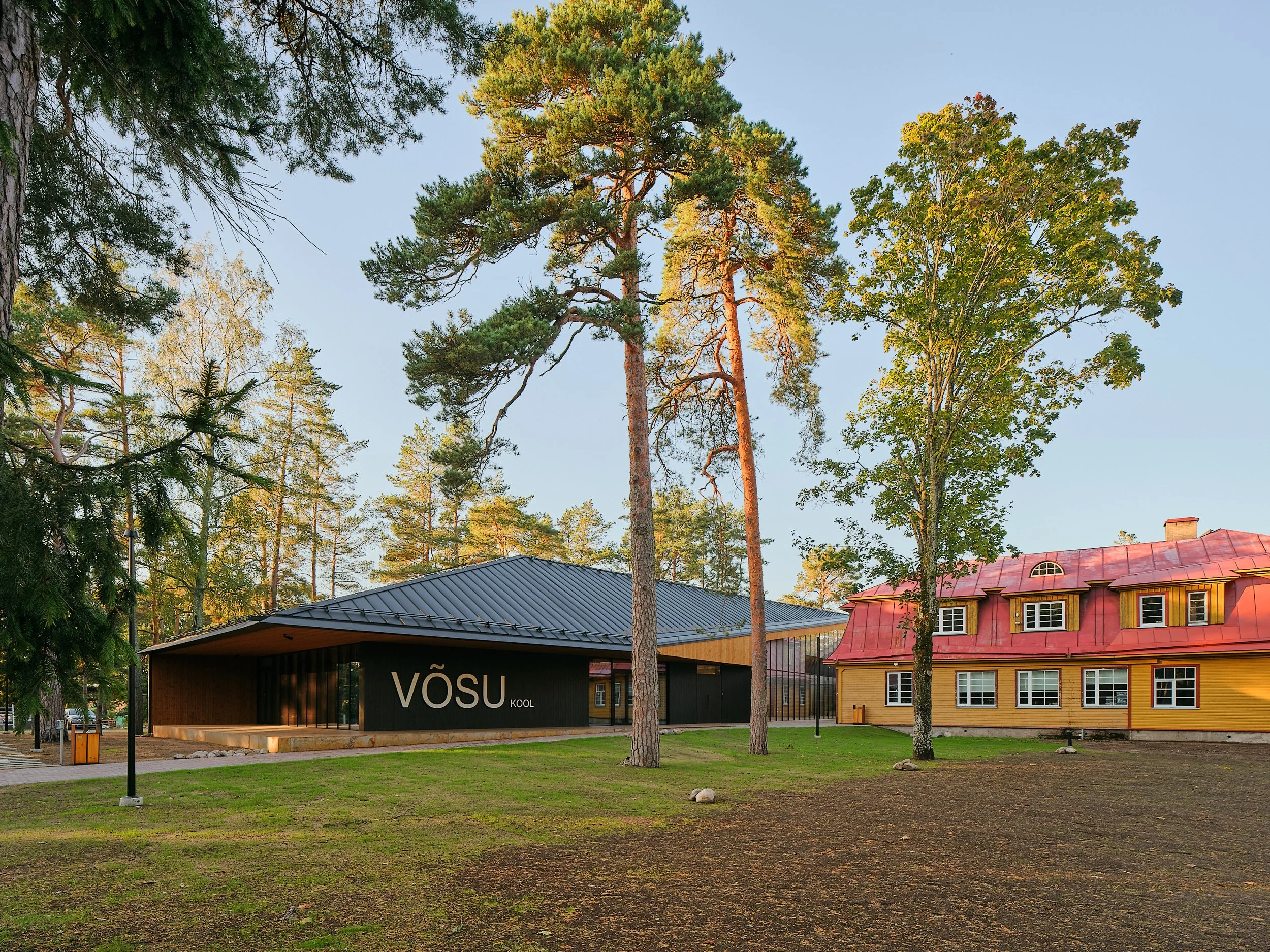
Võsu Basic School and Kindergarten
Address
Võsu, Haljala vald, Lääne-Virumaa, Estonia
Architecture
3+1 Arhitektid
Structural Engineering
Makespace OÜ
Interior Architecture
Kaidi Org
Construction
Enska Ehitus OÜ
Built
2025
Photographs
Karl Kasepõld
Project Insights: A Structural Engineer's View
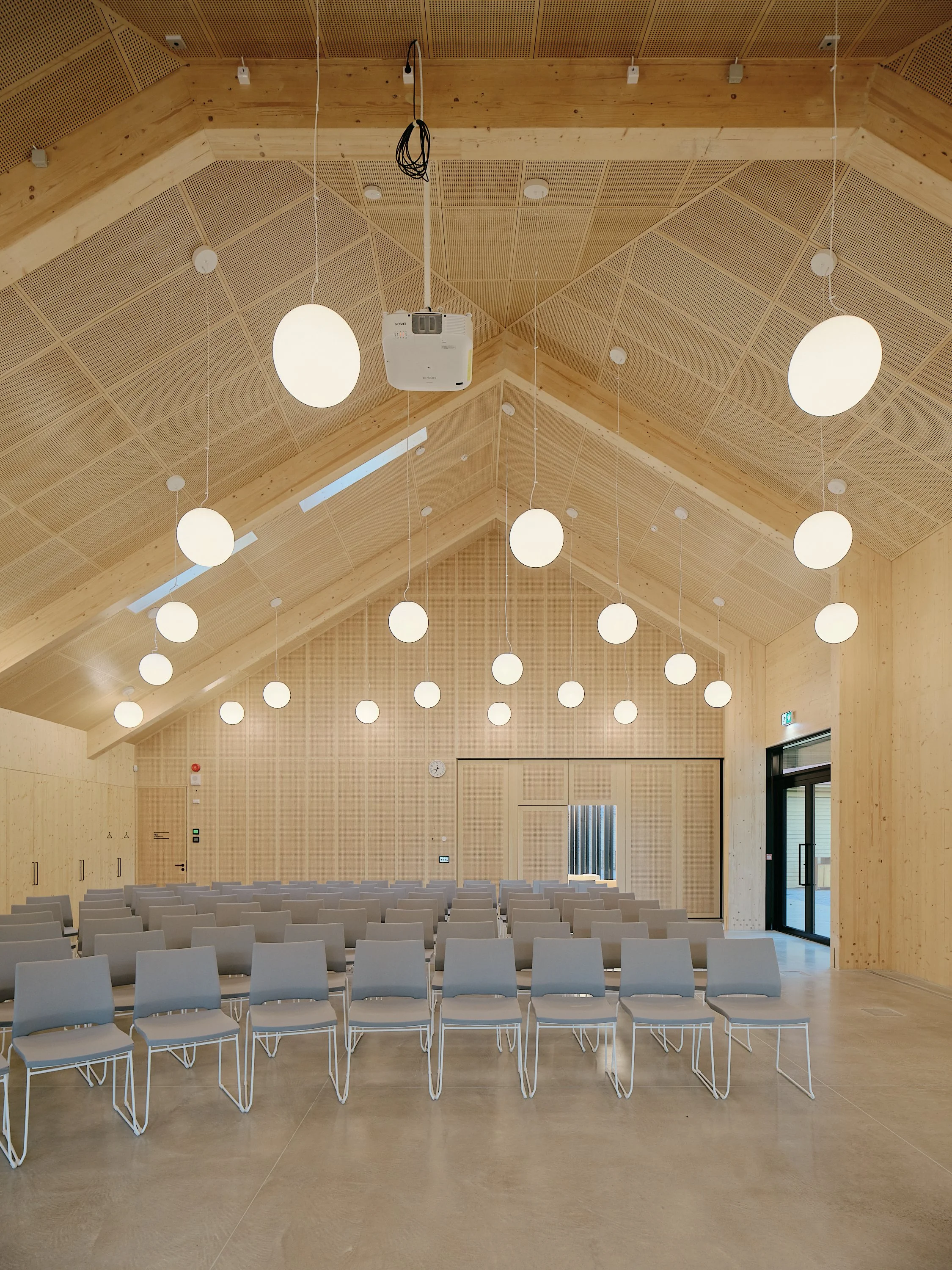
Võsu Basic School and Kindergarten is defined by the harmony between its timber structures and a cohesive architectural design. The load-bearing walls, columns, and beams—predominantly made of glulam—are precisely integrated into the spatial layout. In the building’s focal point—the main hall—the glulam frames are left exposed. These frames are unique, as they follow the sloping roofline and support the primary and secondary beams concealed within the ceiling.
The corridor connecting the building's various functions—which will later integrate with the cafeteria—soars through two stories and surprises with its geometric design. The deep penetration of the glass facade into the roof structure required clever technical adaptation. What makes the corridor unique is that the support line is not positioned directly beneath the roof ridge: the rafters of the shorter slope rest on the ends of the longer slope's rafters, which cantilever over the load-bearing longitudinal beam.
At the ends of the building, the dominant feature is the nearly 4-meter cantilevered eaves. This load-bearing system of glulam rafters and secondary beams is arranged to achieve a visually clean result. The sharp line of the eaves was made possible through the expert collaboration of carpenters and tinsmiths.
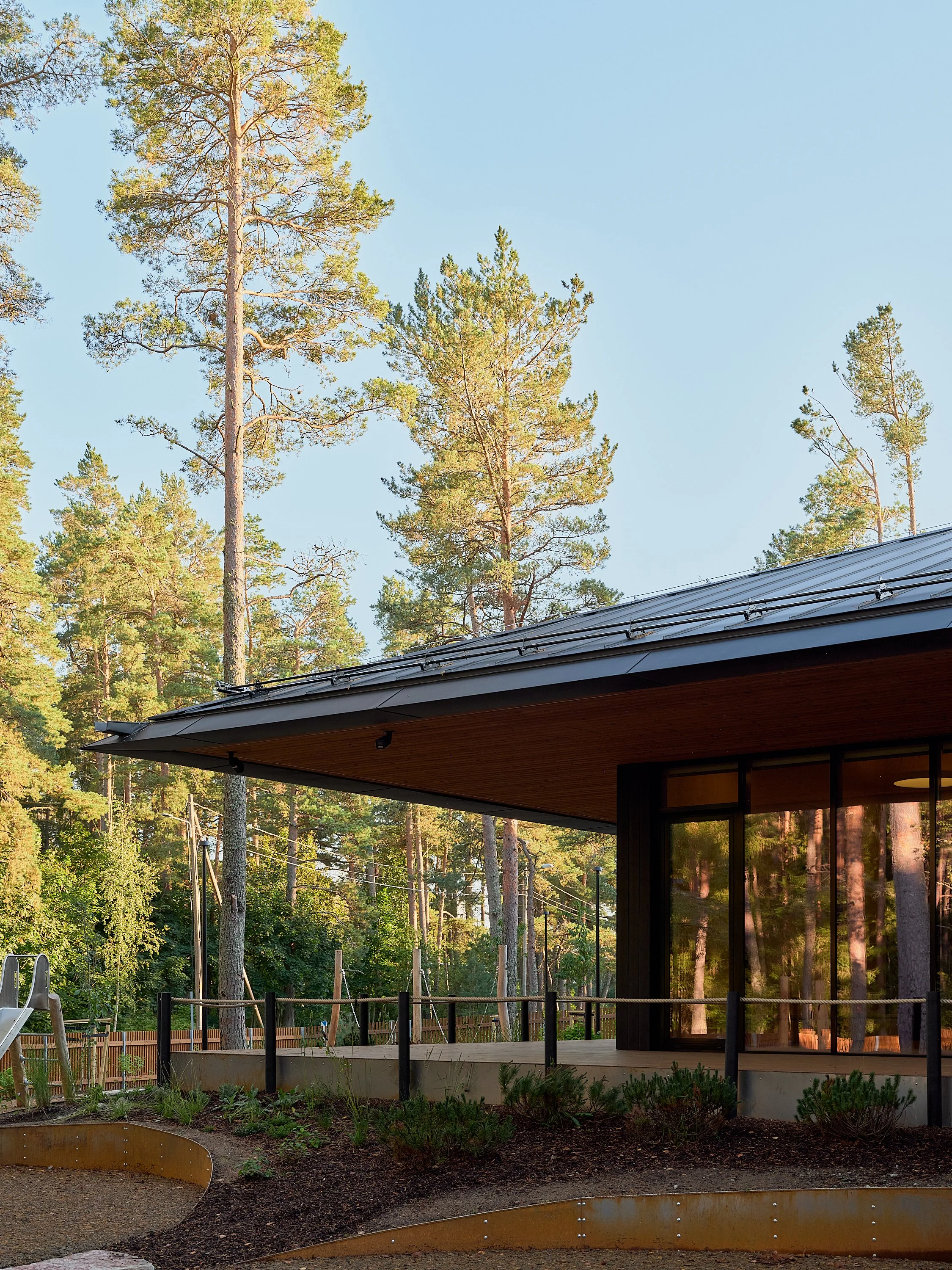
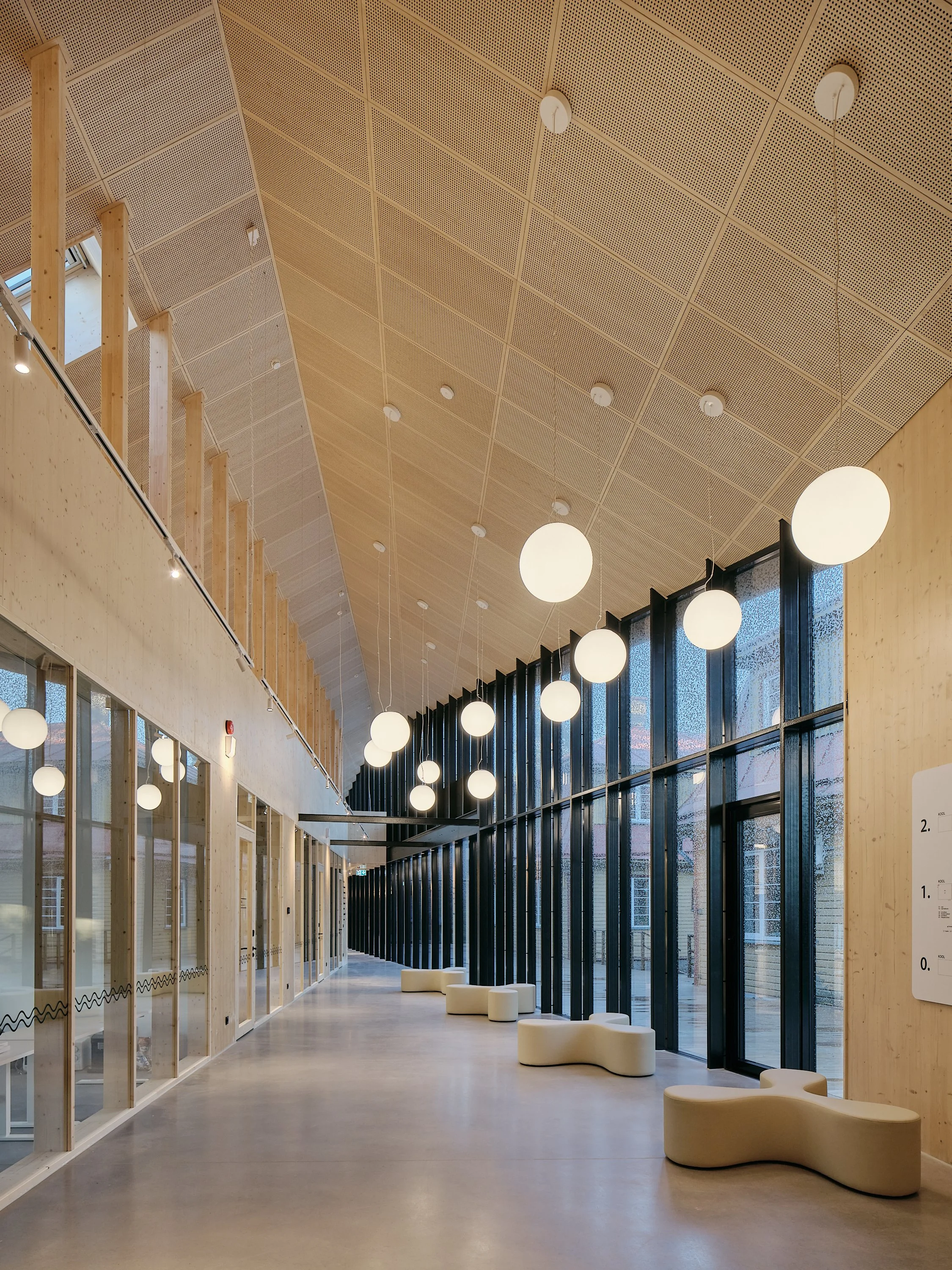
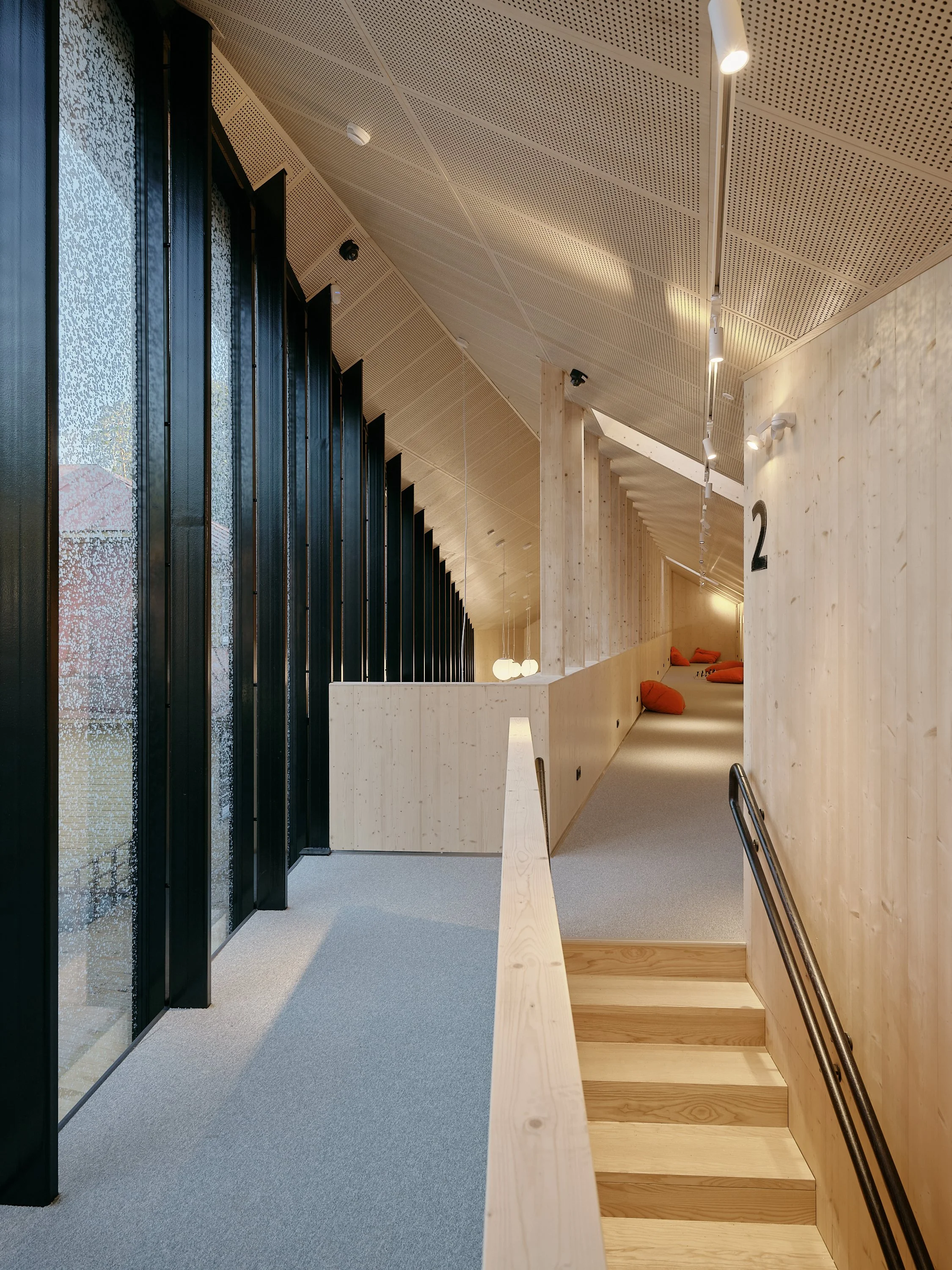
“Our goal was to create a new modern building which honours old schoolhouse constructed in 1932. The new building is inspired by the traditional Estonian barn house, which is very characteristical for this area. The school got a new modern learning environment combined with local community house.
There is a big hall which can hold up to 200 visitors to host concerts and is also a place where school events take place. The other side of the building accommodates kindergarten, which has a vast play forest under the trees.
Classrooms are located in the old reconstructed schoolhouse and are connected to the new part with its courtyard. The connecting courtyard transforms into the heart of the school and is used as a dining area.”
3+1 Arhitektid